This is an update on my previous blog post regarding same-sex marriage. I will begin in Blog 1. with an update on the legal movement to effect same-sex marriage; then in Blog 2.  I will present an argument from a leading opponent of same-sex marriage; and finally—in Blog 3.–I will venture my own opinion with a modest proposal.

The march towards having the Supreme Court of the United States hear the arguments for and against same-sex marriage appears to be inexorable with a new challenge being added almost every month. This month’s challenge comes from Arkansas. A Pulaski County Circuit judge declared a 1997 state law and the 2004 Arkansas constitutional amendment banning gay marriage to be unconstitutional according to the Supreme Court’s interpretation of the U.S. Constitution (Windsor). The judge made his decision official after the close of business hours on Friday, May 9. Because he did not also issue a stay order, he set up a rush to some Arkansas county courthouses. Carroll County issued fifteen licenses to same-sex couples on Saturday, thus making Arkansas the eighteenth state of the union to allow same-sex marriages. The attorney general announced his support for same-sex marriage but put into motion the process of creating a stay. Both sides of the question must submit their arguments for or against the stay by noon, Tuesday, the thirteenth. The State of Arkansas now joins the list of Utah, Oklahoma, and Virginia, among others with orders to strike down same-sex marriage pending before the Supreme Court. On May 13, 2014, an Idaho judge struck down Idaho’s ban on same-sex marriage, thereby setting the wheels into motion to make it the nineteenth state to allow the performance of same-sex marriages. That number is approaching half of the states of the United States. continued…

Posted in Featured | Leave a comment

“Everything existing in the Universe is the fruit of chance and necessity.”

-Democritus

                Evolution is the process of transmission of hereditary results of mutational changes and the eventual establishment of new species. Embryology is the science of biology of animals in the earliest stages of development in utero–the development of an embryo from the fertilization of the ovum to the fetus stage–and the rudimentary plant contained within a plant seed. In humans, the term embryo refers to the ball of dividing cells from the moment the zygote implants itself in the uterine wall until the end of the eighth week after conception. Beyond the eighth week after conception–the tenth week of pregnancy)–the developing human is referred to as a fetus. Evo-Devo [Evolutionary Development] is a very new science, a little more than twenty years old, with most of its discoveries coming after the turn of the twenty-first century. Darwin and the scientists who succeeded him were able to demonstrate convincingly that evolution had occurred, and was, in fact, still occurring and what evolution is. The problem in evolutionary studies has been to demonstrate how evolution happened. At the core of its research agenda is the desire to understand the evolution of animal body plans—Bauplans–in terms of changes in embryological developmental patterns and processes.

Embryology studies the process from a single celled fertilized—sperm cell united to an egg cells–to the adult with its millions, billions, or, in the case of Homo sapiens sapiens, some 10 trillion, cells formed into tissues, organs, and body parts, each with a crucial function, coordinated into a functioning and reproducing individual. The evolution pioneers, Darwin and Huxley, knew that development was the key to evolution; but in their time, nothing was known of the actual process. Embryology, heredity, and evolution were intertwined early on, but, lacking fundamental knowledge, the three disciplines became separate and pursued their own lines of interest and evidence. Embryology stalled in a pattern of investigating visible form, ignorant of the underlying mechanisms. The work of Gregor Mendel was not re-discovered until decades after he outlined his laws, and genetics did not begin to prosper until well past the turn of the twentieth century; even then geneticists focused on only a few species. Paleontology focused on the largest time scales of the geologic record, fossil evidence, and the evidence of evolution of the higher taxa. Early on, embryology played no role in what came to be known as the Modern Synthesis. It was not until embryology joined the synthesis with significant–even startling–new information, that it became known how the processes took place.

The initial work by embryologists was the study of the eggs of fruit flies, Drosophila melanogaster. The striking finding coming out of that pioneering work was that most of the genes discovered in the fruit flies which governed their bodily organization were eventually found to have exact counterparts in most animals. The body of work established that the development of vastly different body parts, structure, and functions, long thought to have developed from separate and distinct mutations and developmental pathways, were actually the function of a few ancient adaptable proteins—recall the discussion on Hox genes.

The new discipline of evo-devo relies on the fact that, because early developmental events determine the ground plan for further development, small alterations in the genetic programs underlying early development can lead to drastic changes in phenotype. Scientists developed methodology combining developmental and evolutionary views, which makes sense since evolution occurs as a consequence of changes in developmental mechanisms that produce phenotypic variations which are then exposed to natural selection. The comparison of developmental genes among multiple species grew to be the science of evolutionary development, and this new science bridged the gaps between the other evolutionary study disciplines to produce a synthesized whole that not only explained the fact of evolution, but how it occurs. This combined evo-devo approach has provided unequivocal evidence for the modular nature of embryos—that they have discrete developmental fields, able to change independently, producing safe variation and diversity in evolution.

Vertebrate embryos of any type have common features. The prediction, and the established finding, is that the more common the feature, the earlier it appeared in evolution. The morphological and resulting functional differences that distinguish one vertebrate from another arise later in development, and represent fairly small deviations from the pre-existing plan–the Bauplan. For example, a two chambered heart becomes a three-chambered heart, and then a four-chambered heart over evolutionary time, but the heart itself is universal. Similarly, the vertebrate brain consists of hindbrain, midbrain, and forebrain, but the relative size and organization of each brain division and the functional regions within them can be modified during development according to the evolutionary history of each species. Evo-devo scientists across the world have utilized the tools of genome studies, molecular genetics, and huge computers to expand the world’s knowledge of the veracity of the concept of evolution to the point that it is no longer challenged by valid scientists.

An explosion of information has resulted. The most critical work has been to sequence the entire DNA complement—the genomes—of multiple species, including man and almost all primates. It became evident very early that humans and chimpanzees share nearly 99% of their genes, but even mice and humans have virtually identical sets of some 25,000 genes. The discovery of the ancient genetic “tool-kit” genes is irrefutable evidence of the descent and modification of animals, including humans, from a simple common ancestor. It was discovered that from a few such genes the development of form and function occurred from the turning on and off of genes at different times and places in the courses of embryological development. Evolutionary changes derive from alterations in where and when genes are used, especially those genes that affect the number, shape, and size of a structure.

The genomic system constitutes the developmental program or template. During mitotic divisions, the progeny cells of the zygote become different from one another via the process of cellular differentiation. A higher mammal has enough DNA to encode on the order of two million average size proteins. There are at least 220,000 possible combinatorial patterns of gene expression. Yet, only a tiny fraction of DNA–about 1.5%–codes for the roughly 25,000 proteins in human bodies. About 3%–100 million individual bits—is regulatory. Regulatory DNA contains the instructions for building anatomy; and evolutionary changes within this regulatory DNA lead to the diversity of form, a process which is incremental, additive, heritable, and driven by exposure to environmental stress over time; there have been over 600 million years of animal life and evolution on the earth to foster natural selection.

Fossil forms give evidence of the pervasive use of repeating parts and modular architecture being modified and changed to forge a diversity of animal designs indicative of the activities of those few genes. As described above, the five digit limb design has persisted in multiple forms but with recognizable similarities for 350 million years. The adaptations for compound eyes, dark plumage, fish with antifreeze chemicals and no hemoglobin, color vision, large brains, fire-fly light, zebra stripes, pygmy elephants, fresh water pink dolphins in the Amazon River, giraffes, and men with seven cervical vertebrae, manatees with six, three toed sloths with nine, snakes with dozens, and fish gills, all formed by variations of the same simple fundamental processes. The coelacanth, known in fossil form 350 million years old, also lives today with DNA proteins in the same kinds of genes that humans and spiders share.
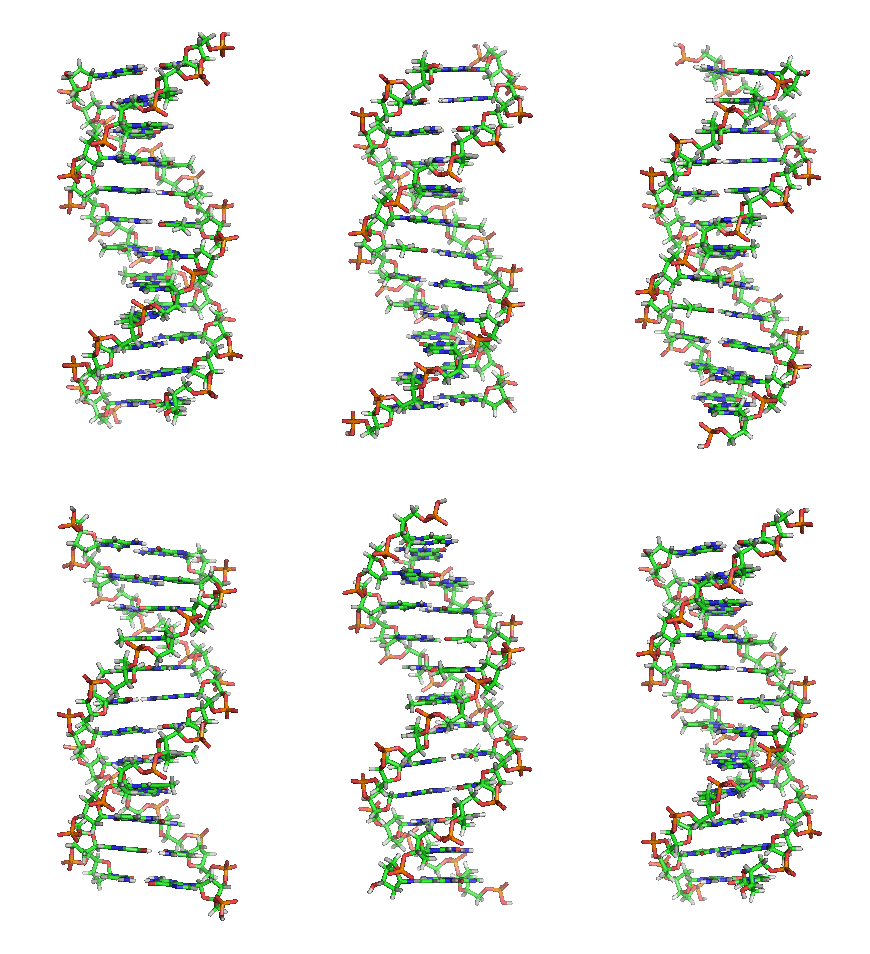
Animation of the structure of a section of DNA...

Animation of the structure of a section of DNA. The bases lie horizontally between the two spiraling strands. (Photo credit: Wikipedia)

The processes of evolution as identified by evo-devo studies demonstrate the validity of evolutionary concepts. For example, early animals had mouths full of very similar teeth. Later animals developed different kinds of teeth more suited to the needs of their environments. Human teeth include a variety of different kinds of teeth reflective of our retention of the original genes and of the evolution of our complex and successful form. Another characteristic of simple animals is symmetry and polarity controlled by “tool-kit” genes which are in turn regulated by “switch genes”. The same genes—same protein sequences—exist in modern man but are often altered in function, thus representing a remarkable economy in the evolutionary process.

Mutations acted on the standard simple gene functions; and, in turn, the functions altered form over time to result in a different form that was better able to cope with environmental stressors. Limbs separated into upper and lower branches. Upper branches became gills or antennae; lower branches became legs eventually able to lift our ancestors out of the water and to walk on land. Finally, those same limbs resulted in bipedalism producing an animal able to run rapidly to take part in feeding while food was still present and to flee predators. All of these changes required staggering amounts of time—geologic time.

In spite of the rich structural and functional variety of animal body forms found in nature, no more than about 35 different body plans exist, all of which appeared during the Cambrian radiation, over half a billion years ago, indicating an astonishing stability of structure once integrated as a complex form. Although extensive evolutionary changes have occurred since the Cambrian, the underlying body patterns have been highly conserved, a result of the frugal use nature makes in the use of its crucial core genes.

It is crucial to understand the role of homeotic genes. Gene cloning technology was developed in the last third of the twentieth century and gave rise to an extensive understanding of how genes work. Because of its simple four gene structure, the fruit fly was the focus of attention. The work on fruit flies [Drosophila melanogaster] led to the discovery that certain collection of proteins which served as genes were “homeotic genes” which had special effects on particular body regions and parts. The investigating molecular biologists determined that 180 base pair sequences in homeotic genes was a “box” of similarity in otherwise long tracts of DNA sequence. The “boxes” were dubbed “homeoboxes” and the process that resulted from the boxes was called the “homeodomain”. The homeotic genes within these homeoboxes were called Hox genes for short. Laboratories all over the world began a concerted effort to study Hox genes and soon found that altogether similar genes functioned in much the same ways in bugs, earthworms, cows, and humans, a veritable jackpot of information relating to the similarities of genetic function in virtually all extant animals. The animals were full of homeoboxes, or Hox genes.

The stunning finding was that the sequences of amino acids in the so-called Hox genes were almost identical across the wide spectrum of animals. From previous fossil studies, it was known that many of these species had diverged from each other as much as 500 million years ago; and yet, with the advent of evo-devo studies it was realized that they had very, very similar Hox genes. The obvious conclusion was that the Hox genes were so important that they have been preserved for millions of years and hundreds of millions of generations, and that they are the sites of minor changes in amino acid sequence that produce major form changes by increments on a geologic time scale. This was a clear demonstration of how evolution has taken place. Hox genes are the Rosetta Stones of evolution. Disparate animals are made by the same kinds of biological tools, indeed by the same genes.

Close on the heels of the discovery of Hox genes came the discovery, again in the fruit fly, of “tool-kit” genes—a kind of master gene. Other genes were found to act similarly. The Pax-6 genes which govern eye development are found throughout the animal kingdom, in animals with all sorts of eyes. It is highly probable that Pax-6 genes have been present from very ancient times and modified by mutational processes—new tricks for old genes—and are a clear evolutionary link among most species harking back to a very early common ancestor. Distal-less (Dll) genes were found that are responsible for the development of all sorts of structures that protrude from animal bodies—legs, antennae, fins, wings, gills, ampullae, siphons on sea squirts, and tube feet on sea urchins, for example. Similar genes to those that produce tube feet on sea urchins produce tube feet on star fish and the legs of birds. Dll is to the evolution of appendage type forms what Pax-6 is to eyes.

Other such genes determine the development of hearts; others are responsible for production of bony structures; still others produce pheromones. Tool-kit genes were found to be governed by “switch genes”–multiple switches for different subpatterns of function. Again, the frugality of nature is demonstrated; the same genes perform many different functions as determined by the on and off functions of the switch genes (often present as surrounding proteins around Hox and tool-kit gene clusters). The genes first found in fruit flies and their relative frequency of occurrence have counterparts in vertebrates and non-vertebrates, including many much more developed and complex animals such as mammals with their 25,000+ genes. The complexity of animals arises from the many operations taking place at the same time and in succession during development, all of which have been subject to minor incremental mutational changes over the many hundreds of millions of years and billions of generations to produce the animals of today and undoubtedly those remarkable changes yet to come. Subtle changes, often no more than an alteration of position of two or three amino acid pairs, serve to produce the incremental changes of evolution at this molecular biological level, changes that accumulate over time to produce profound differences in form and function which eventually result in speciation, the appearance of a new animal able to procreate with similar members of its population and not with common ancestors. continued…


Posted in Featured | Leave a comment

It may well be for all the complexity of the feather and the limb, the human head and its contents are the crowning success of evolution. The human head is the most complex part of our body. The three pound brain uses twenty percent of all of the energy of the body. The head has the brain, eyes, ears, nose, and tongue–our primary sense organs. The bones of the skull are intricate and complex with protective cranium, articulated jaws for biting, and tiny ossicles that make hearing possible. The neural connections are beyond counting—in the trillions. And throughout the animal kingdom, there are thousands of variations of complex heads. Think of hammerhead sharks, anteaters, toucans, turtles, and chameleons. Did the human head appear one day complete in all of its detail, or did it appear as an evolutionary process—which, perhaps—is still ongoing?

Two simple sea creatures, the larvacean and the sea squirt, are the closest living relatives of the vertebrates, and they have no heads at all. However, they do have the genes to make a head. The larvacean is a tiny gelatinous tadpole which lives in a floating house made of its own mucous. Its rudimentary nervous system is organized along a simple nerve cord that runs along its back. The related sea squirt starts life as a swimming larva with a rodlike stiffener in its tail. When it reaches maturity, it drives its front end into the ocean floor, eats most of its nervous system, and turns it body into a basket for filtering food particles. The potential for a vertebrate head in each of these simple creatures is found in the front tip of larvaceans and larval sea squirts. They each have a small brain-like organ with 360 nerve cells where vertebrates have heads. The pattern of development of that small organ is strikingly familiar to what is seen in vertebrates, and some of the same genes that build human brains are present there. The genes are located front, middle, and rear as ours are.

Sea squirts have been found to have primitive cousins of neural crest cells, the cells which build much of the head in developing vertebrate embryos. The sea squirt neural crest cells emerge along the back of the developing embryo and migrate through the body. Unlike vertebrates where such cells finally produce a skull, the sea squirt’s cells become pigment cells which make the creature’s brilliant bodies. It is postulated that around 500 million years ago our ancestors may have resembled these modest little beings, already equipped with genes and cells that would later, by scores upon scores of mutations, sculpt into the faces and brains of humans and other vertebrates. More attention to humans, and especially the brain and head in future blogspots in this journey of understanding and appreciation of biological evolution.

The plant world operates in much the same way genetically as does the animal world. Darwin expressed his confusion about flowers which were, for him, “an abominable mystery”. Flowers appear to have emerged in the fossil record quite suddenly, and quickly presented an exquisite complexity. Modern research reveals that the first flowers almost undoubtedly split off from their closest living relatives, the gymnosperms (which include pines and other conifers, cycads, and ginkgoes), which produce seeds but not flowers.

Before a flower takes shape, sets of genes mark out an invisible map at the tip of the stem, a map almost identical to that found in animal embryos. The genes divide the tip into concentric rings. Guided by the genes, cells in each ring develop into different flower parts—sepals in the outer ring and sex organs in the innermost rings. The genes that build flowers are older than the flowers themselves. Gymnosperms, some 800 kinds of flowerless plants, carry flower-building genes even though they do not make flowers. Although the genes are present, their function is unknown in the gymnosperms. Flowers came into being by a chance duplication of a gene, freeing one of the genes to proceed on in its evolutionary progress to become a flower. Flowers became more complex, and some of their parts gained new functions such as luring insects by the same extremely long process of having a great many mutations until the 250,000 flowering plants of today came into existence. All of these extraordinary changes came about over eons of time and millions of generations and gene mutations—the evolution of living things by natural selection as demanded by the environment and facilitated by the natural functions of genes, fundamental structures of all living beings, flora and fauna. As ignominious as it may seem, humans share a substantial of their genes with lettuce. continued…

Posted in Featured | Leave a comment

In this blogspot we will consider the amazing bird wing and the human hand. Surely, argue the Creationists, the feathered bird’s wing and the human hand in all their engineering splendor, near infinite complexity, and marvelously coordinated function must have been the product of a divine Creator able to build and coordinate such wonders all at once to allow for such integration of structure and function. However, until 380 MYA, such limbs did not exist. Fossils and embryos provide the wealth of clues that establish the evolution of these complex and various structures. Starting about 400 MYA, lobe finned fish emerged bearing the first suggestion of a limb. Its lobe-fins superficially looked like the rest of the fishes, but anatomically the bones inside the fins were larger, stronger, and more heavily muscled than any other fish up to that time.

It took tens of millions of years of changing lineages of lobe-fins for true limbs to take shape. As described earlier, Eusthenopteron–a 385 million year old fish–had fins that contained large rod-shaped bones linked to a pair of smaller bones, the pattern of modern human arms and legs. Tiktaalik roseae, a 375 million years old lobe-fin added wrist and ankle bones. This fish could have used its fins both to swim and to crawl on land. It could not have walked or rotated its shoulder, however. 365 MYA, lobe-fins gave rise to vertebrates with true fins which had now become true tetrapods, four footed, even toed creatures adapted to water by their ancestral gill bones and finned tails but able to waddle on land. Later still, tetrapods developed the basic plan of the limb and adapted it to new functions of digging, paddling, walking on land, and even flying.

Again, the genes responsible for the building of complex limbs were discovered to be tools-in-hand in the ancestral animals, and natural selection produced the necessary bit-by-bit of change that resulted in the marvelously adapted structures seen in modern animals. As in the other changes described, the genes came from the basic ones that lay out the body plan. They mark off the body from head to tail, then they become active in making tiny buds that become arms and legs and wings. The genes of early fish were reused to make fins. Subtle shifts in the genetic patterns resulted in changes in shape that produced arms, legs, hands and feet, and wings, all coming from machinery already in place.

Flight feathers of birds are brilliantly complex and marvelously functional. It would seem to be a leap of faith to conclude that evolution produced such a marvel. The basic anatomy of feathers involves a central vane from which hundreds of filaments and barbs sprout. The barbs sprout smaller filaments, some with grooves and some with hooks that zip the barbs together like Velcro. These airy filaments create a lightweight plane that can lift a bird skyward. Birds pull their feathers apart to clean them, and then the barbs zip back together by themselves. In addition feathers perform such varied functions as are found in the club-winged manakin, a sparrow-size Ecuadorian bird which can rattle its wing feathers so loudly that they sing. Owl feathers have a natural stealth quality that dampens sound. Fuzzy down feathers provide warmth, and not least, extravagantly curved and colored feathers attract mates. As remarkable as all of these feather variations are, they all come from a basic pattern that started with reptilian scales.

The evolutionary link between feathers and scales is apparent in developing bird embryos. Placodes–discs of cells–are scattered across the surface of the early embryo. Some of the placodes grow into scales such as cover chickens’ legs, and others become feathers. The stepped evolution of feathers involved old genes being modified frequently for new uses. In reptile embryos specific genes demarcate the front and back of each scale as it develops from its placode. In bird embryos, each feather begins as a tube growing from a placode utilizing the same front and back genes. 150 MYA, these same genes took on the new role in dinosaurs, causing some to sprout feathers and feather-like growths that recent fossil finds have revealed.

Branch-like barbs came next. The development of baby downy feathers offers clues as to how that happened. As a new feather tube grows, it divides into strips which peel away into barbs. Minor genetic changes would have been necessary to result in the tube’s splitting. The same front and back genes mark the points around the tube where it will eventually split. Later birds developed the ability to turn downy feathers into veined feathers, and still later the changes in barbs that make the hooks that zip the barbs together were developed. Finally, the special plumage for hunting, swimming, and courting came into being from the original basic reptile scale genes. continued…

Posted in Featured | Leave a comment

This is the final blog post in the series about abortion. The opinions and the research contained in this post–as in the previous two on the subject–were ignited in the present author by his writing in his most recent work: The Trojan Horse in the Belly of the Beast Trilogy, and by his young friend who wrote passionately and articulately from the point of view of a sensitive religious girl who places transcendent value on human life.

My young friend concluded that—beyond the unconscionable taking of nearly 56 million lives of unborn human beings—there is very significant personal and societal damage wrought by abortion, especially as practiced on a wanton and wholesale basis as has come to be the norm throughout the world as of 2014.

Rape and incest aside, unwanted pregnancy is not a condition forced upon a woman or girl. The choice to give in to sexual urges is elective, and so is the decision to carry the pregnancy to term. There are alternatives to abortion, very much viable and valuable ones. Hundreds of thousands of couples yearn for and would be altogether willing to adopt the unwanted baby, would willing bear the financial burden of the pregnancy and delivery, as well as the subsequent costs of caring for the baby. Our society would likely benefit from a sea change of attitude towards responsibility: actions have consequences. Pregnancy is the result of sex. A baby can become the precious family member of parents willing to accept the costs. A girl can go through the pregnancy and delivery; countless millions have done so successfully. Her life, to say nothing of the baby’s can proceed with little inconvenience by having the baby adopted instead of killed. She can get on with her budding educational, career, and social life. The regrets and emotional scars of having borne an unwanted infant can fade nearly to nil; while, for many the psychological effect of having been responsible for the killing of her baby never fades away. Besides, a significant number or abortions are performed on women pregnant by their legal husband or their long-term significant other. Would it really be a great wrong to make a societal turn to include taking responsibility and making a nonlethal decision?

Furthermore, contraception is readily available, effective, and cheap. The one gratifying statistic in the mix about teenage pregnancy, unloved babies, and the personal and social upheaval that surrounds unwanted pregnancies is that there has been a dramatic reduction in the number of teenage pregnancies. Girls are having less illicit sex, developing fewer STDs, using contraception more frequently when they do have sex, having fewer abortions, and having fewer pregnancies every year—a very significant reduction over the past two decades. Society’s costs for unwanted babies who are born into a situation of poverty and single parenthood are declining.

Persistent regret and psychological scarring resulting from the decision to have an abortion is significant and damaging. Depression, drug abuse, and failed marriages with all of their negative societal impact and cost are a drain on all taxpayers and caregivers. The Guttmatcher Institute, 2010, stated, “82% [of women after having abortions] had greater feelings of loneliness or isolation. 75% had less self-confidence; 63% [lived with hampering] denial…The average period of denial that the reported was 5.25 years.”

“92% of women have emotional deadening…a need to stifle their emotions. 86% [reported] increased tendency toward anger or rage. 48% reported that they became more violent when angered. 86% [expressed] a fear of others learning of the abortion or a greater sense of fear for unknown reasons. 58% suffer from insomnia or nightmares. 57% had greater difficulty in maintaining or developing relationships. 56% had suicidal feelings. 53% increased or began use of drugs or alcohol. 39% had eating disorders which began after abortion. And 23% attempted suicide. [C. Ruse, 2014]. Ruse went on to report that significant numbers of women are speaking out about the fact that abortion was not an act of empowerment for them but rather the result of abandonment, betrayal, and desperation, and that having an abortion negatively impacted and truncated their lives. Many described lives of promiscuity, chemical abuse, impairment of formation and maintenance of relationship, or bonding with future children. According to UNICEF in 2012, 6.6 million children in the world died before their fifth birthday, most of them related to maltreatment and neglect. Abortion has made a contribution to that lessening of sympathy for the defenseless. 2,300 people in the U.S. have died at the hands of physicians upon request as physician-assisted euthanasia, and 1,040 have died from involuntary euthanasia, further indication of the diminution of regard for human life.

Not only women and society suffer from the effects of the abortion fad. Men who pressure the mother of their child to submit to an abortion often later report that they have violated a fundamental part of a man’s nature—that of defending and protective his woman and his child. For society and the family, this impact on men has been shown to cause less restraint for inflicting violence against women and others and child abuse. Rates of domestic violence and child abuse have risen fairly dramatically since the decriminalization of abortion. Granted, abortion is only one of many associated elements of the decline of civilized behavior over the past several decades, but it is difficult to deny the watershed point of Roe v. Wade in 1973.

Induced abortions are associated with a markedly elevated incidence of pregnancy and delivery complications for which our society pays a hefty financial as well as human price. The complications are those associated with pre-term birth: premature rupture of the uterine membranes, hemorrhage, postpartum cervical and uterine abnormalities and the attendant risk of future infertility and difficulty with carrying out successful desired pregnancies. Abortion in younger girls, often for the purpose of postponing parenthood to a later age, results in an increased incidence of infertility, fetal deformities, and premature deliveries associated with aging in the woman. 400 women are reported to have died from legal abortions in certified clinics and hospitals in the U.S. since 1973.

Planned Parenthood, the greatest purveyor of abortion, admits that the short-term risks of abortion are undisputed: blood loss, blood clots, incomplete abortions requiring return hospitalizations with the attendant financial drain on the public purse, pelvic inflammatory disease and infection, and injury to the cervix and the uterus—including lacerations and incompetent uterus–with the long-term risk of miscarriage of wanted pregnancies.

The most egregious forms of abortion shock the consciousness of even the most jaded body politic. Full-term abortion, even abortion after the head of the baby has crowned or has been delivered are permitted by law but nonetheless disturb even pro-abortion enthusiasts. Abortion clinics have been convicted of selling babies’ body parts to medical researchers; a Philadelphia abortionist was charged in the deaths—the outright murders—of babies delivered alive in failed abortion attempts. Physicians in a prominent Chicago hospital determined that they had been aborting healthy infants and infants with non-fatal deformities, and that many of these babies lived for hours after birth. [A. Hawkins, 2012]. They further concluded that no efforts were made to determine if any of them could have survived with appropriate medical assistance.  Margaret Sanger, the founder of Planned Parenthood, is quoted as saying, “The most merciful thing that a family does to one of its infant members is to kill it.” A great many thinking Americans would disagree and would recoil from its implications if the news and the media were to publicize that attitude that furthers the massive and expensive abortion industry. Nevertheless, in 2012, researchers found that, “86% of all abortions are done for the sake of convenience.” [Michael]

New Zealand, with its high rate of abortion has suffered direct consequences. The nation needs between 30 and 40 thousand immigrants to maintain the status quo and will shortly have an inadequate working class to support its population. This will force the aging class to work longer and to live with less financial security. According to a report, Impact of Abortion on Society, 2011, in the year 1999, there were 15,501 abortions in the country with a small population. The result seen in 2005 was that 574 classes of 27 children would not need teachers; 15,501 school uniforms would not need to be made and a similar number of other clothing would not be required; 62,000 pairs of shoes will not be needed; 19 million food packets will not need to be produced for schools; $620,000 worth of school stationery will not be purchased; $1-1.5 million worth of school fees will go unpaid; $1 million worth of toys will not be purchased or used. On the obverse side of that coin, if abortion had not become rampant after 1973, more than 17 million New Zealanders would not be employed resulting in $400 billion entering the economy from those workers and $58 million contributed to the social welfare safety net programs for the aging population. Upwards of 400 million babies have been aborted who could have eventually contributed to the robustness of the New Zealand economy which is now in a state of what appears to be a slow but inevitable decline.

It is sobering to realize that high fertility cultures such as Muslims are now tipping the balance of culture in Europe and Asia with attendant increases in rates of poverty and government dependent citizens because nonMuslims cannot maintain the 2.1 children per family required to maintain a stable national population and a culture. This is especially true of Southern and Eastern Europe. In the United States, the birth rate is 2.0, and many of those births are occurring among illegal immigrants.


Posted in Featured | Leave a comment

The evidence described in blogposts 10-14 brings us back to the question of how it is that bacterial flagellae, the eye of a fly, the engineering feat that is the flight feather of a bird, and the human hand and head, in all their diversity and complexity, could have come about within the framework of natural selection without necessarily requiring an overseeing Creator. The Jon McNaughtons and the Intelligent Design proponents insist that evolution could not have produced such incredibly complex results. There is a wealth of published evidence available to support the scientific answers that evolution did just that. In this blogspot, we will review the data regarding bacterial flagellae and the amazing variety of eyes found in the natural world.

Consider first the bacterial flagellum, a study in complexity in miniature: Escherichia coli, a common gut bacterium swims about using a tiny tail that spins in a complex and integrating fashion which is made up of several dozen different proteins. Creationists insist that that tail could not have evolved bit by bit, but rather had to have appeared in its present extremely complex form as an act of Creation. In fact, scientific evidence shows that the flagellar proteins were assembled from simpler parts. The flagellum is built by a kind of pump that squirts out proteins, a pump nearly identical, protein-for-protein, to one found in many disease-producing bacteria. Those pathogens, however, use their pumps not to make a tail, but rather as a priming mechanism for a molecular syringe that injects toxins into host cells. It has been proposed that the parts of E. coli’s flagellum came together step by miniscule step over millions of years. It started with a syringe-like pump, acquired a long needle, then a flexible hook at its base. In time it linked to a power source, another kind of pump found in the cell membranes of many bacteria. Once it was equipped with a “motor”, it became able to spin, and the needle evolved into a propeller. The result was that the microbe had new and complex mobility. There are scores of different flagellae in different bacteria, all the results of differing avenues of natural selection. Although E. coli makes only one kind of complex tail, it also carries the remnants of genes capable of making other types of tails.

And consider the marvelous eye: Darwin, in awe of the exquisite construction of the eye, which would be useless if it were not perfect, said, regarding the natural selection producing the eye, “[It] seems, I freely confess, absurd in the highest degree.” Other early evolutionists, taking a less defeatist point of view, thought that eyes had to have evolved independently many different times and in different ways. Modern research, however, indicates that eye-building genes evolved only once in an ancient animal and then other genes under control of those primordial eye genes produced eyes which over time changed from simple to increasingly complex. What follows is a synopsis which only describes a limited sketch of the evolution of eyes. For more in depth presentations, the reader is referred to Richard Dawkins’s, Climbing Mount Improbable, Chapter 5, pp. 138-197, W.W. Norton & Company, New York and London, 1996, and Sean B. Carroll’s, The Making of the Fittest-DNA and the Ultimate Forensic Record of Evolution, Chapter 4, pp. 92-113, and Chapter 8, pp. 193-203, W.W. Norton & Company, New York and London, 2006.
Modern anatomists concede that the eye is, in fact, far from perfect, despite all of its wondrous ability to allow animals to see, and it would seem very much out of character for a perfect Creator to create an imperfect eye. The retina is too loosely attached to be safe from a blow to the back of the eye; its light-gathering cells, for some inexplicable reason, point inward towards the brain instead of the more logical orientation of pointing outward towards the source of
light. The optic nerve starts in front of the retina and then passes through it en route to the brain producing a blind spot. Evolution has blunders, but still produced an eye; a Creator would scarcely have been the author of errors. Evolution has produced different eyes from the primordial eye genes and their myriad changes. The differences in eyes are profound. The process of evolution proceeded from simple to complex because of the extreme adaptive value of improving vision with more survivors among populations that could see more clearly or with improved color vision. Two photocells capture more photons than one, three better than two, and so on. Photocell arrays of membranes are lined in layers, each layer containing vital photon-trapping pigment; a human photo-cell has around ninety-one layers with the same biological logic: 91 layers capture more photons than 89 layers or 45 layers, and so on. For each of these evolutionary developments, even one is better than zero.

Human eyes have a single lens and retina. Fly eyes are made up of thousands of tiny columns, each capturing light with ciliary photoreceptor cells. Insects and other invertebrates use rhabdomeric photoreceptors, cells with distinctive chemicals. When underlying genetic functions that build photo receptors are studied, insects and humans are found to use the same genes, genes that cause embryonic photo-receptors to capture light, using opsin molecules. It is evident to evolutionists that almost all animals’ photoreceptors evolved from a single cell that eventually split into two types—rhodomeric and ciliary.

It is also presumed that some animals carry both types of photoreceptors. Recent modern science showed that rag worms, aquatic relatives of earthworms, have rhabdomeric photo receptors in their eyes and ciliary photo receptors hidden in their brains where they appear to sense light, not for seeing, but to set the rag worm’s internal clock. It would appear that the common ancestor of most current animals had a basic complement of genes for building organs for detecting light, much like what is currently found in salps, gelatinous sea creatures. Salps possess pits lined with photo receptor cells, adequate only to sense light and to tell the direction from which it comes. Still, one is better than zero. These simple receptor structures came from the same set of genes that produced fly and human eyes.

The lens of the eye is made of up transparent proteins called crystallins, which bend light. Crystallins existed in creatures well before they became part of an eye. Sea squirts use crystallins to sense gravity. The same genes that are found in flies and humans likely mutated to give the crystallins new and different functions, and after myriads of changes occurring over eons of time, became the astoundingly complex eyes of modern animals. Limpets have basic eyes in which light-sensitive eye structures are covered with protective transparent cells. The structure is too basic to form an image, but allows for sensing light. Beyrich’s slit shell has a deeper eyecup which allows for information about the direction of the light source to be transmitted, but still it is inadequate to produce an image. The Chambered Nautilus has a fluid filled cavity surrounded by a light sensitive layer that can be called a simple retina. It is connected to an optic nerve. A small gap at the top of the Nautilus’s eye chamber acts like a pinpoint pupil or camera that focuses light on the rudimentary retina and allows for the formation of a dim image. The Nautilus organ is every bit an eye. Murexes are medium to large sized predatory sea snails. The Murex eye has a lens, cornea, retina, and its fluid cavity is fully enclosed. Light is focused by the primitive lens on the enclosed retina to create a slightly sharper image. The Common Octopus has a distinct cornea and lens, a clear-cut retina enclosed in a tightly sealed fluid chamber, and a colored iris. The lens is capable of focusing light to produce a considerably clearer image. The scallop’s primitive blue eyespots capture light with a mirrored surface, and the complex camera-type eye of vertebrates from sharks to sunfish to birds to humans evolved from the same type of basic light catching device.

The New Zealand tuatara, or  Sphenodon, which looks like an iguana, but is a reptile unlike any other in the world, or any other vertebrate, for that matter. It is a living fossil with a basic skeletal structure and skull shape almost identical to that of tuatara fossils dating back to a period before the rise of dinosaurs. Its organs and traits are closer to the evolutionary baseline than comparable structures in other animals, such as teeth of the same design as dinosaurs, and the possession of a remarkable eye. The tuatara has a third eye at the top of its skull, a poorly understood pineal eye, which is found in only a very few reptile species and which vision researchers believe harks back to one of the original eyes found in nature—basically a few light sensitive cells on a stalk.

The genes that produced these many kinds of eyes evolved from a closely related common ancestry. The concept that all the different types of eye structures and functions evolved independently has been demonstrated to be incorrect. Evolutionary theory adjusted to the concept that each eye did not have to start from a wholly different beginning, and certainly not from multiple eyes being created in their final modern structure and function; rather changes occurred in basic common elements. Duplication in genes allowed for two genes to evolve in different ways to result in the same result—seeing and understanding the information coming in from a perceived image. continued…

Posted in Featured | Leave a comment

The burgeoning fields of molecular genetics, evolutionary development, and the study of genes revolutionized the understanding of evolution and began to allow great insight into not only what happened as fossil studies showed, but how evolution took place.

9. Study of Gene Changes-Effects leading to greater complexityThis discipline is a methodological approach to how transitional forms likely developed. An article in National Geographic Magazine, November, 2006, pp 114-135 by Carl Zimmer entitled “A Fin is a Limb is a Wing” presents a lucid explanation of how complexity in the plant and animal kingdoms came about, a rebuttal to the argument that organisms such as bacterial flagellae, the eye of a fly, the engineering feat that is the flight feather of a bird, and the human hand and head could only have come into being as a created whole and essentially all at once. Evolutionists agree with Creationists that a limb, a feather, or a flower is a marvel, but Evolutionists do not agree that any or all of them are miracles in the sense of having a supernatural origin.

The genetic underpinnings of natural selection provide a simple and elegant explanation as to how all of those dazzlingly complex structures and beings came to be. Rules govern change: Complex structures evolve through a nearly infinite series of simpler intermediates. Nature is thrifty, modifying old, even ancestral genes, for new uses and even reusing the same gene in new ways, to build something more elaborate. The process of Natural Selection in living creatures has been long and convoluted but because survival was enhanced by some changes, the process was directional—towards greater complexity and enhanced survivability.

Prior to 600 MYA, life was in single cell forms such as Choano- or Cyano-flagellates, tadpole-shaped water sifting sac-like creatures, which still flit about in modern ponds propelled by undulating filaments. About that time, single celled creatures began to give rise to multi-cellular animals. The Choano-flagellates were equipped with the makings of social life and an increase in cellularity and complexity. Proteins made by Choano-flagellates include several essential to maintaining a multi-cellular body which were not and are not directly useful to the single celled animal. Choano-flagellates, the nearest living ancestor to today’s animals have adhesive proteins which lock animal cells together, a feature that may allow the capture of bacteria for food or for metabolic communication between cells, or to sense environmental changes. Minor genetic changes could easily have led to the union of such cells and finally to cohesive and interdependent cellular organisms, including the human organism with its ten trillion cells.

About 400 MYA, Hox genes, which act as master switches to turn on other sets of genes that guide the formation of distinct regions of animals’ bodies, became active in the developing embryos of then extant animals which resulted in the reshaping of such things as fins into early limbs and rudimentary wings. Hox genes are active along an animal’s body in a particular order, from head to rear, and are clustered along the animal’s chromosomes in exactly the same order. An ancient fish, distantly related to the butterfly fish, gave rise to a creature that could walk on land with an intermediate fish that had primitive fingers on its fins. In the same way, through endless genetic changes a bat’s wing became a retooled hand with a thin membrane over elongated finger bones, resulting from a minor modification in the limb build-ing gene in a mole-like ancestor. Tiny as that change was, the new animal, the bat, could fly.

The question of which came first, the chicken or the egg is answered simply and directly by the Theory of Evolution by Natural Selection. It is the chicken. But, the animal’s complex adult form emerges gradually as the embryo develops. The early embryos of fish, chickens, and humans look very much the same. Genes active in corresponding parts of the embryos of almost all animals activate processes of development down markedly different pathways producing fins, wings or arms. Over the eons of time that the 400-500 million year-long evolutionary processes engendered since Hox genes appeared, small changes in these crucial gene sites resulted not only in the vast array of variety, but also in the remarkable panoply of complexity seen in the plant and animal kingdoms.

A developing fly larva looks as devoid of features as a grain of rice. However, it contains a map, driven by an ancient Bauplan, of the complex creature that it will become. Multiple unseen combinations of genes are active in the tiny organism marking it off into what are early on invisible compartments, each of which has its own shape and function. Some sprout legs, others wings, and still others antennae until finally the invisible but present anatomy becomes visible. One example of the genetic control of this process is the Hox gene called Antp which controls the development of the thorax. In the mouse, a version of that same gene, Hox c6, controls the formation of that animal’s thorax which encloses its heart and lungs. Body proportions can change depending on where particular Hox genes are active. The same Hox gene, Hox c6, switches on at different points along the body. The presence of that gene marks the beginning of the thorax. Its activation results in different species having markedly different neck lengths—short in the mouse, long in the goose and giraffe, and no neck at all in the python.

The genetic combinations that are responsible for laying out the fly’s and mouse’s bodies have nearly identical counterparts in many other animals, ranging from crabs, to earthworms, to lampreys, to Homo sapiens sapiens, a disconcerting finding given the great complexity of the difference between such disparate appearing and functioning organisms. The common ancestor of all of these animals was probably a wormlike creature (Xenoturbella, a tiny Cambrian worm or Corophioides, a large U shaped annelid-worm whose fossils were found in Cambrian Topiates Sandstone in the Grand Canyon of Arizona) that lived about 570 MYA. Those very early bilaterian creatures were endowed with a basic set of body-plan genes which only its descendants used to build their more complex bodies.

The velvet worm, an unexciting little animal, creeps along tropical forest floors on nearly identical pad-shaped legs. It is the closest living relative to the single most diverse group of animals, the arthropods, with their dizzying range of bodily complexity—tarantulas, horseshoe crabs, ticks, and lobsters to name a few. Velvet worms use the same basic set of body-building genes to lay out their anatomy as did Xenoturbella and Corophioides and as do modern arthropods, but with vast changes in complexity over time in which the same genes performed new and different tasks. Changes in body compartments developed into organs for breathing which later developed into wings; and wings, found on multiple segments as seen in fossil insects, were shut off or were used for other building activities. Flies, for example, have just one pair of wings, but a second pair became club-shaped structures called halteres, which help flies remain balanced in flight. Although the segments became different in the different arthropods, the basic machinery for making the appendages is the same throughout present day creatures and those that came before them. Due to genes, especially Hox genes, the great variety in the animal kingdom is largely a variation on a common theme. continued…


Posted in Featured | Leave a comment

Most people have at least a passing level of knowledge in the primary non-molecular evidence area of evolution—the study of fossils.

8.  Chronology-Fossil and Stratigraphy, Radioelement Dating:

There are two major methods of dating the age of the earth and its inhabitants: Relative dating and numerical or radiometric dating.

Relative dating places fossils in a relative temporal sequence by noting their positions in layers of rock or strata (The Law of Biotic Succession which states that fossils in a stratum will always occur in the same sequence regardless of geographic location, i.e. rocks with the same fossils are of the same age wherever they are found.). Based on empirical data, predictions from physical law (gravity), and actual findings, undisturbed deeper strata are presumed to be older than more superficial strata by superimposition (The Law of Superposition). Flaws in the methodology reflect the fact that some layers do not lay horizontally, even at the beginning or because layers were disrupted by being overturned in movements of the earth. To compensate, three methods of dating are utilized—faunal succession, crosscutting relationships, and inclusions—comparing strata from all around the world, presuming that clearer stratification in one area will suggest a similar age in another area. As a matter of work-a-day efforts for geologists, paleontologists, and evolutionists, it is regularly observed that organisms are more similar the closer they are in rock strata and more dissimilar by decrements the farther separated they are from each other.

Numerical or radiometric dating relies on the random pattern of decay of unstable radioactive elements such as uranium (half-life of less than a second), plutonium (half-life of 24,000 years), potassium (half-life of 1.25 billion years), potassium-argon (K-40 decays to Argon 40 which can be measured), rubidium (half-life of 4.9 billion years), and carbon 14 (half-life of 5,730 years) which have a measurable half-life. Carbon 14 is accurate for up to about 20,000 year old specimens, but is only partially accurate for biologicals back to 40,000 years ago. Active elements decay at regular rates irrespective of conditions. Half of the U-238 in rock will be left at 4.47 billion years; half of the remaining U-238 will remain in another 4.47 billion years. Volcanic eruptions produce especially rich radioactive materials. Measurement of the time-frame of existence of fossils found between layers of different layers of volcanic ash permits especially accurate time determinations. Association with species’ fossils which have a known age, helps to determine the age of a newly discovered fossil.

Rocks brought back from the moon have been dated to between 4.4 and 4.5 billion years ago. The oldest solid substances found on earth are zircon crystals that were formed 4.4 billion years ago. It is postulated that an asteroid the size of Mars struck the earth and scattered debris that later coalesced to form the moon. Very old rocks—the oldest, found in Greenland, is 3.9 billion years—and the oldest meteorites, suggesting the age of the earth is 4.5-4.6 billion years old) are dated using volcanic material which gives a relative age—older rocks below and younger rocks above a layer of volcanic ash or by inference from fossils in rock strata. Sedimentary rocks less than 40-50,000 years old can be dated using their radiocarbon content. After many decades of work around the world, geologists have assembled a reliable geological time scale on the basis of radiometric dating. Despite innate errors of radiocarbon 14 dating of 10-20%, a good rough estimate of relative age of objects less than 50,000 years old is possible.

Less major methods, utilized for more difficult to categorize specimens (no volcanic ash, no radioactive materials), include optically stimulated luminescence, measuring how long a specimen of sand or dirt has been away from light, is a new technique that is proving to be useful. Electron spin resonance, which measures how much radiation damage has accumulated in a fossil is another recent technique that can help determine a fossil’s age.

The earliest suggestion of life on earth in geological formations is layered rocks known as stromatolites that were probably the result of the actions of bacteria at least 3.4 billion years ago (BYA). Fossils, i.e. those found in the oldest strata, suggest the existence of worm-like creatures a billion years old. Soft bodied multi-cellular organisms, are dated to between 635 to 540 million years ago (MYA) and are likely intermediate forms between the single celled organisms that lived in the first 1-2 billion years after the formation of the earth and the first hard-bodied creatures that appeared in the sedimentary fossil record beginning about 540 MYA. There is a notable transitional form between fish and early tetrapods that lived on land. It appeared in the fossil record dated to about 375 MYA.

Fossils from about 315 MYA document the evolution of large amphibians from the early tetrapods. Rocks bearing the skeletons of dinosaurs began to appear about 230 MYA, and they were intermediate forms which evolved from reptilians found in earlier sedimentary layers. Another lineage from reptiles found in the sedimentary fossil record lead to mammals between 250 and 200 MYA. Archaeopteryx, a 150-155 million year old fossil that has the skeleton of a small dinosaur but also has feathers and wings, is an intermediate form between dinosaurs and creatures found in China and dated to 110 MYA that have smaller tails and clawed appendages. In more recent fossils, located in ever more superficial layers have been found evolutionary intermediate specimens leading to modern organisms—from apes and whales to elephants, armadillos, and humans. One branch of the mammalians–the primates–began to appear between 60 and 80 MYA. The most recent species ancestral to both humans and chimpanzees lived 6-7 million years ago. Therefore, technically, man did not “descend” from apes, especially chimp-anzees, but chimps and man had a common ancestor which no longer exists from whom they both evolved separately.

An ingenious method of checking the accuracy of radiometric dating was devised by John W. Wells of Cornell University (Coral Growth and geochronometry, Nature 187:948-950, 1963). Dr. Wells studied fossil corals which lived in the Devonian Period, about 380 MYA according to radiometric dating studies. He made use of an established physical/geological fact that tides create a friction which gradually slows the earth’s rotation over time. That results in each revolution of the earth around the sun—one day—taking a miniscule bit more time that did the previous day. The result is that every 100,000 years the length of a day increases by about two seconds. However, the length of time that the earth takes to rotate around the sun—one year–does not change. This results in the number of days per year decreasing over time. Using the known rate of decrease in the number of days per year, Dr. Wells worked backwards from a putative date by radiometric measurement of 380 MYA when the corals were alive to the present.

If the tidal friction, number of day shortening predictions were correct, he theorized, then each year would have contained 396 days, each 22 hours long. Corals were an excellent study material because they maintain an ongoing record of their lives by having daily and yearly rings. The researcher need only count the number of daily rings between each yearly ring accumulated when the coral was alive to determine the number of days per year. Wells counted the rings—the tidal age–and cross-checked them against the radiometric data. The Devonian corals experienced roughly 400 days per year with each day being 21.9 days in length, a very small deviation from the predicted 22 hour days. The correlation between tidal and radiometric age was extremely close, hence scientists have strong confidence in the data they glean from radiometric studies.

Direct observation of ancient phenotypes may be taken from fossils, which provide unique information on entirely extinct groups of organisms, and are usually associated with stratigraphic information pertaining to relative and absolute geologic ages. Nonetheless, the fossil record has many well-known shortcomings, including the famously incomplete levels of preservation, and usually very limited information about the nature of soft tissues such as hearts, nerves, and brains. continued…


Posted in Featured | Leave a comment

To continue the discussion that came to the present author as a result of doing research for his Trojan Horse in the Belly of the Beast Trilogy, every day, we are bombarded with scenes of murder and mistreatment of women and children in the entertainment and news media until we have become desensitized to the gravity of what is being inserted into our minds. In an extraordinary extension of that desensitization, a significant majority of Americans and other members of Western Civilization have come to accept the wholesale massacre of innocent human beings as being politically correct, as important “women’s rights” and as acceptable choices—the pro-choice movement. This blog post is written to convey what the author attempted to do in his Trojan Horse Trilogy regarding FGM as it pertains to abortion—the horrific truth from which we turn our eyes and accept the pablum of “a woman’s choice”. In truth, the mortality rate in abortion is at least 50%–one of the two human beings in the pregnancy dies.

The author is indebted to a young girl living in his community for her comprehensive and insightful dissertation written as an assignment for her high school—The American Heritage School. The facts and figures regarding abortion speak for themselves, all political correctness and fatuous excuses aside.

Worldwide, 55 million unborn children are killed every year. Of those, more than 150,000 unborn children are killed every day; over 6,000 are killed every hour; and more than 100 every minute. And that grim set of statistics neglects the incidence of unreported abortions.

Various anti-abortion laws were in place in every state of the American union since at least 1900. Abortion was outright prohibited in thirty states and legal only under certain circumstances—including pregnancies resulting from rape, incest, and date drug-rape drug in 20 states. The 1973 United States Supreme Court decision Roe v. Wade invalidated all of these laws in one fell swoop, and launched a slaughter unprecedented in the United States and eventually the world. This is the result: In America, one baby is killed by abortion every 26 seconds; 137 every hour; 3,304 every day; 23,196 every week; 100,516 every month, 1,206,192 every year. Mind you, that is in the one country—the United States of America—alone. In Russia in 1957, there were 3,407, 398 abortions reported. By 2012, that number fell to only 1,070, 980 as a result of the availability of better contraception. In the United States in the year 2000 alone, more children died from abortion than all of the Americans who died in the Revolutionary War, the Civil War, World War I, World War II, the Korean War, the War in Vietnam, and both Gulf Wars combined—55,772,015 abortions. The numbers are so staggering that we have lost sight of the fact that we are speaking of nearly 56 million people. As disturbing as it may seem, we have descended into a level of acceptance described by Josef Stalin, the late mass murderer of the Soviet era: “The death of a single person is a tragedy. The death of millions is a statistic.”

Americans and other “civilized” nations have come to accept as a matter of course four spurious arguments to salve their consciences about what is going on in the dark corners (legal hospitals and clinics) where these infanticides are carried out: “The fetus is not a human being.”; “No one is injured.”; “A woman has a right to what goes on in her own body.”; and “No woman should be obligated to loan out her body to a mere fetus.”

First of all, despite all of the biological/legal nonsensical arguments to the contrary, everything in the adult human is present at the moment of conception. If there is a soul, it came to be at that instant. The milestones of first fetal heartbeat, first intrauterine movement, first point of viability outside the uterus, and delivery of a live infant are all only steps in the developmental progression of a human being. There is one aspect of law in the United States that recognizes that fact: murder of a pregnant woman is a double homicide. Illogically and ignominiously, we have a schizophrenic approach in the law: the killing of an unborn infant is acceptable if done as a legal abortion.

The thought processes that govern acceptance of abortion of otherwise entirely healthy unborn children carry impairment of thinking to an historically unprecedented level of mass indoctrination. Joycie Arthur, writing on Personhood, 2007, put it succinctly: “The status of a fetus is a matter of subjective opinion, and the only opinion that counts is that of the pregnant woman.” Apparently, a majority of Americans buy into that unthinking and spurious argument. The same author in 2001 put it another way: “For example, the state cannot force people to donate organs or blood, even to save someone’s life. We are not obligated by law to risk our lives jumping into a river to save a drowning victim, noble as that might be. Therefore, even if a fetus has a right to life, a pregnant woman is not required to save it by loaning out her body for nine months against her will.”  [Emphasis, the present author’s].

Those arguments fly in the face of our national cooperative agreement: we spend huge amounts of the citizens’ money to save one pound premature infants; we expend fortunes every year to rescue fools who disobey all measures of commonsense and the law and ski or snow mobile into prohibited territory, to locate missing children, to combat forest fires, floods, and other natural disasters even though most of those contributing have no association with the unfortunates involved. Dr. Kavorkian was roundly condemned as being “Doctor Death” for performing assisted suicides in people–many of whom were just sad—and he went to prison. Abortionists, however, are respected members of the medical community. It seems to this author that there are few more glaring examples of illogical thinking than that. It is easier to make reference to the unborn as an “it”, “a fetus”, rather than as a baby, a human being. That way we can justify failure to include our helpless unborn into our national cooperative agreement.

Let us be clear on one thing: the babies being killed are healthy and would live normal lives if allowed to be born into a nurturing family with a caring mother. Far less than one percent of abortions are performed for pregnancies resulting from rape, incest, high risk to the mother, or for serious deformities of the developing infant—more aptly distinguished as therapeutic abortions. That is, the vast majority of abortions in the world are induced abortions–purely elective. In China and India, most abortions are performed to kill girl babies, because of the prevailing concept that boys are more valuable. Taking the heartless objective approach that Josef Stalin or Mao Tse-Tung espoused regarding the sanctity of human life, especially including the value of the unborn, we can ask, “Does it really matter? Is society as a whole benefitted or harmed” Or for that matter, is the mother—who has become the focal point of our protective involvement—harmed by abortion? Those questions will be considered in blog post three of this series of Friday blogs. continued…

Posted in Featured | Leave a comment

Every year, I go through a personal and family ritual that sears my emotions. To understand why, it is important to envision the place. It is a small town cemetery that has been in place for a little over 150 years when the area’s first pioneers—English emigrants who fled persecution in the East for their religious convictions–first braved the harsh elements and hostile Indians to settle in the mountain valley where it resides. It is a beautiful place–especially on Memorial Day–ringed with dozens of American flags softly waving in the light breeze of an unseasonably warm sunny day. It is a piece of Americana that is disappearing in many places in the country. The small roads going through the cemetery bear the names of the sextons who tended the place for those 150+ years. Almost every grave is covered with a small loving blanket of flowers brought by recently bereaved and some quite distant ancestors of those who rest there. There is an explosion of color in what is otherwise a very quiet and sober—even sacred place. There is respect and reverence there; it is still strong etiquette not to step on the graves themselves. There is an invisible pathway just below the gravestones where one can be sure that no disrespect is shown the departed. Children quickly learn that they must not step on the grave stones themselves. The quiet reverence accorded those who sleep there is quickly learned, and even the children are aware that a hush is the appropriate tone in that place.

Most of the visitors have deep roots intertwined with their kindred dead in our cemetery. It is a place of stories. There are the resting places of men and women who served the cause of freedom and America and their way of life in a remarkable eighteen wars fought by Utah pioneers and Americans. The war dead come from little known conflicts such as the Blackhawk War, the Utah War (with the United States Army), the Apache and Paiute Wars, the Spanish-American War; and, of course, World War I, II, the Korean War, the Viet Nam War (my war), the Cold War, and the War on Terrorism. There are graves of men and women who paid the ultimate price in the ongoing War in Afghanistan.

I grew up here when the town—even the county—was very small; so, I know the people who lie in those graves and their families for the most part. The place holds much of my own history, and it is poignantly painful for me to go with my family to that cemetery. I am old now, and usually my life goes on without feeling the pain and loss that that place represents to me. I am, by nature, a story teller, and my grandchildren always want to hear me recount the story of this and that person whose grave we pass. I am always harrowed up to remembrances that I would rather leave safely compartmentalized in one of the back rooms of my mind. For me—and, I suppose, for them—it has Shakespearean [Richard II] overtones: “Needs must I like it well: I weep for joy to stand upon my kingdom once again.
Dear earth, I do salute thee with my hand, weeping, smiling, greet I thee, my earth… No matter where; of comfort no man speak: Let’s…make dust our paper and with rainy eyes and write sorrow on the bosom of the earth…Let’s talk of graves, of worms, and epitaphs…Let us sit upon the ground and tell sad stories of the death of kings.”

                The stories that pour from my past—some from my tortured past—are not nearly so grand as the sad stories of the death of kings, but they are no less poignant. My father was the only doctor in our county for many of the years of WWII. He took pride in knowing the name of every person in the county, including the children and that he could recognize them by the back of their heads. He wished me to grow up strong and to be able to deal with the hard things of life; so, early on he took me along on house calls. I see the grave of a lovely woman who developed bilateral cancer of the breast and had a hopeless prognosis. I listened as my father told her grieving husband as gently as possible that his wife would soon die. It was the first time I ever saw a grown man cry. I saw the mangled bodies of men who were caught in mine explosions, and all of the horror that entailed; which—all too often—resulted in death. Their graves are there to remind me. I walk by the graves of babies who died of birth accidents, of infections which could not be treated since it was the time before penicillin. I came to know the grief, the agony, and finally the courage to go on my friends and neighbors experienced. Their ghosts are there in that cemetery, and they come back to my memory when I go there.

There are those graves which bring the memories into vivid personal relief. I was twelve when my father suffered a massive heart attack on Mother’s Day. He was unable to get out of bed for two years and grew absolutely frustrated by his impotence. So, one day—against his doctors’ and his family’s heartfelt advice—he got up, put on his suit, and drove to his office in the hospital he owned and began to practice medicine again. He knew he was a dead man walking, but he wanted to live out his last days doing what gave him life—caring for the people of his town. Two years after his heart attack, coincidentally, on Mother’s Day, I was working in a town five miles away from his hospital. My boss called me in to the resort’s hotel to answer a telephone call. I was told abruptly that I must come to the hospital. Now. I asked why, and the answer was, “Just come.” I caught a ride with one of the suppliers back to town. When I walked into the familiar hallways of the hospital our family owned, it was strangely quiet, sedate. A few people were going about their duties, and no one paid me any attention. They, in fact, avoided me. I walked alone into my father’s office and saw him lying with his head on his desk. I did not need anyone to tell me that he was dead. Once the gravity of what had happened became real, it fell to me to have to inform my mother. She never got over it. We did not acknowledge Mother’s Day for the rest of her life. She lies next to him, now at peace, free of the loneliness and torment of more than forty years she spent as a widow.

My boyhood friend is buried there. His family’s graves are a few steps from ours. He and I were inquisitive boys who were learning about rockets. On our own, we began to make a rocket using a lead pipe filled with gun powder and were ready for our first launch. We had fashioned a wick from one we stripped out of a long candle. We knew we could light the wick and have plenty of time to get out of harm’s way. What could go wrong? I went home to lunch with my mother and brother planning to come back to my friend’s house in an hour. That plan was forever interrupted by a sobbing telephone call from my friend’s father telling me that he had blown himself to pieces in their basement. I try not to look at his grave when I go there, but my grandchildren want to hear my story again; or perhaps, they want to see their usually icily calm grandfather cry.

I am irresistibly drawn to the grave of my daughter—my beautiful, perfect little girl. I steal myself not to cry. It has been thirty-six years now; and yet when I walk up to where she sleeps, I am tormented by indelible and perfectly intact memories of that, the worst day of my life. My wife and I were so distraught by her death that we could not bring ourselves to place her name on her little gravestone. Somehow, doing so would be to admit finally that she was lost to us. Every year we swear that we will remedy that folly, but we never seem to be able to face the task once we gain the relief of leaving that place. My grandchildren are respectful of me when I cry. They expect it.

I try to keep the stories of the lives of their kindred dead fresh and accurate in the children’s minds when we walk about that beautiful place. I remind them that the gracious and comfortable lives we all lead where paid for dearly by their great grandparents, whose graves lie there well-tended by the cemetery staff and by family. Those ancestors lived through the Great Depression. Both sets nearly starved to death during the dirty thirties, and they and my wife and I were forever marked by their experiences. We learned to work hard—we owe no one for the roof over our heads or the food on our plates. By habit, we eat everything on our plates, make do or do without, use it up, reuse it, and only throw it away when there is no further use. We eat left overs and are glad to have food; we do not take anything for granted. Our grandchildren see that as quaint. But, such is the legacy of those fine men and women who made the genteel lives of those children’s lives possible. My wife and I are glad to tell the stories of how they worked for a dollar a day—for a twelve hour day—gleaning potatoes. In the case of their maternal grandfather, he worked for a week for a sack of potatoes. They hunted deer for meat. We stand quietly by their graves and try to convey to our offspring the value of work.

The yearly visit to the graveyard in our town is a time of reflection, remembrance, profound sorrow, for a sense of loss, and for a sense of deep pride for the people who have preceded us down the final road we must all travel alone. I am a better man for making the painful journey into the past each year.


Posted in Featured | Leave a comment